

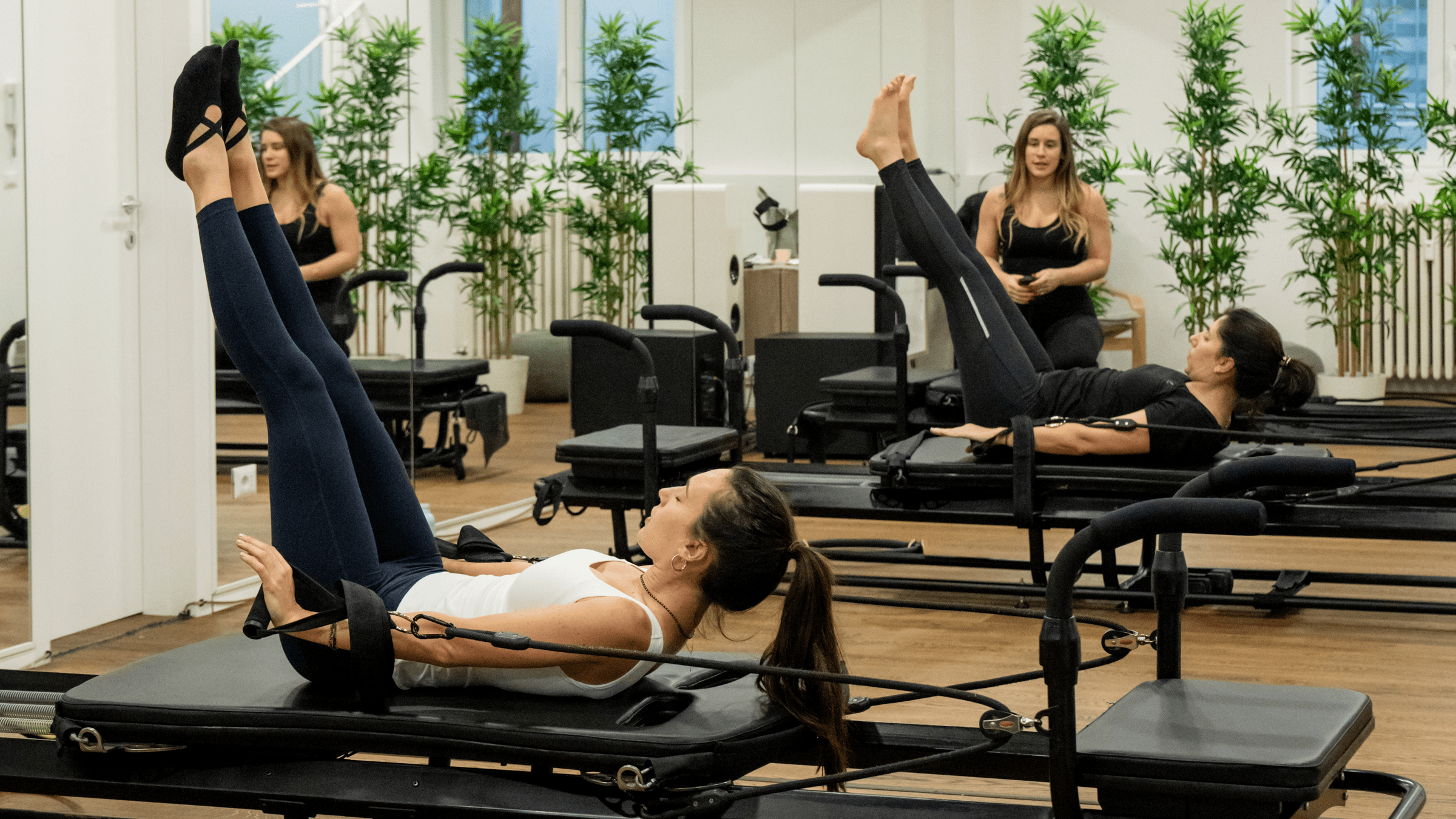
In recent years, Pilates has gained more and more enthusiasts thanks to its benefits for posture, core strength, and flexibility. In Milan, the demand for this type of training is constantly growing, with a wide range of classes available, from bodyweight Pilates (Matwork) to the more advanced Reformer Pilates.
But which method is more effective for personal well-being and achieving fitness goals? Is it better to train with the Reformer or stick to bodyweight exercises? The answer depends on various factors, including experience, training objectives, fitness level, and personal preferences.
While bodyweight Pilates is an excellent choice for those who want a versatile workout without the need for equipment, Reformer Pilates offers a greater variety of exercises and adjustable support through the use of springs and resistance. Alternatively, there is an innovative method that combines the best of both: CoreWork’s Fitness Pilates, which introduces the Core-reformer for an even more effective and dynamic workout.
If you want to understand which method is best for training your body effectively and safely, keep reading to discover which form of Pilates best suits your wellness and fitness goals.
To further explore the benefits of Fitness Pilates, you can also refer to this article: Fitness Pilates Milan - Training the Core.
What Is Pilates and What Are Its Benefits?
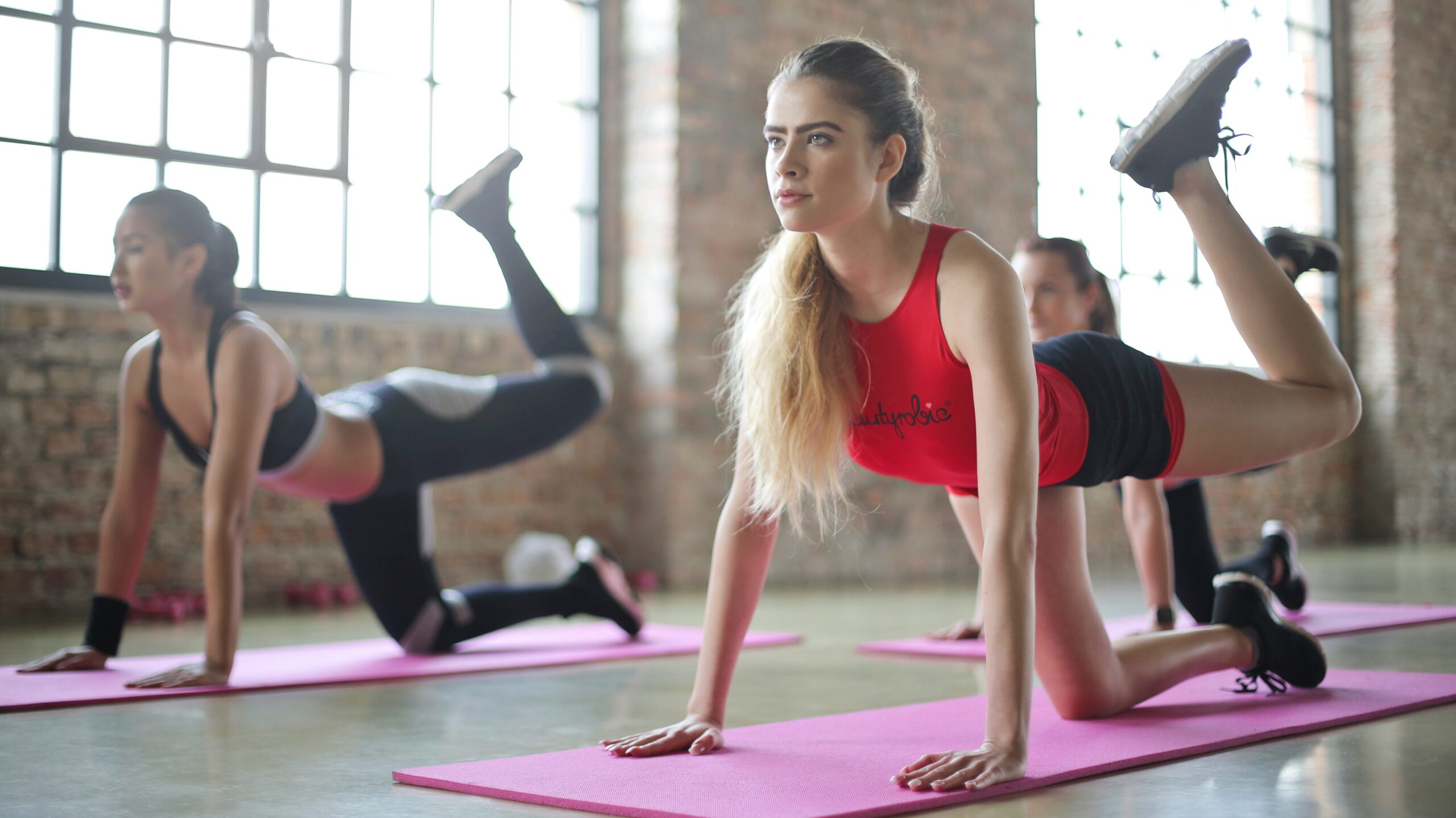
Pilates is a discipline focused on strengthening the core, improving posture, and enhancing the mind-body connection. This training method, developed in the early 20th century, has evolved over time, giving rise to different variations that blend traditional Pilates with modern techniques.
Today, Pilates is a highly popular and appreciated practice, especially in major cities like Milan, where more and more people choose this discipline to improve their physical well-being. Studios like CoreWork have revolutionized the concept of Pilates by introducing innovative methods such as Fitness Pilates, which integrates cardiovascular exercises and resistance training with advanced machines like the Core-reformer.
In this section, we will explore the origins of Pilates, its variations, and the numerous benefits it offers for both body and mind.
Origins and Philosophy of Pilates
Pilates was created in the 1920s by Joseph Pilates, a German-born trainer who developed a workout method inspired by gymnastics, yoga, and martial arts. His goal was to create a system of exercises that could improve strength, flexibility, and body control, with a particular focus on breathing and precision of movement.
During World War I, Pilates worked with injured soldiers, using springs and resistance to help them regain strength and mobility. From this experience, the concept of the Reformer was born—a machine that remains one of the most widely used tools in Pilates today.
Difference Between Classical Pilates and Modern Variations
Over the years, the original Pilates method has evolved, giving rise to several variations:
- Classical Pilates: Follows Joseph Pilates’ principles strictly, using codified exercises with a strong focus on control and breathing.
- Contemporary Pilates: Integrates new biomechanical principles and modern adaptations, often using equipment like the Reformer.
- Fitness Pilates: A more dynamic and high-intensity version that combines traditional Pilates with functional training and cardiovascular elements.
CoreWork’s Fitness Pilates is an example of this evolution: a workout that retains Pilates fundamentals but integrates a more intense and personalized approach through the use of cutting-edge machines and adjustable resistance to suit all fitness levels.
General Benefits of Pilates
Regardless of the chosen variation, Pilates offers numerous benefits, making it an ideal discipline for anyone looking to improve their fitness without putting excessive stress on the body.
Posture and Flexibility Improvement
One of the main goals of Pilates is to correct posture and improve spinal alignment. Through targeted exercises, it enhances joint mobility and muscle elongation, promoting better posture and preventing muscle tension.
In CoreWork’s Fitness Pilates, every movement is designed to improve flexibility and mobility while maintaining a focus on stabilization and proper core activation.
Core Strengthening and Deep Muscle Activation
Pilates is well known for its ability to strengthen the core, which includes the muscles that stabilize the torso and spine. These include:
- Transverse abdominis, which acts as a stability belt.
- Obliques and rectus abdominis, essential for torso control and movement.
- Lower back muscles and pelvic floor, which contribute to spinal support.
With the CoreWork method, the use of the Core-reformer enhances core activation even further, as the variable resistance system requires constant muscle engagement throughout every exercise.
Injury Prevention and Lower Back Pain Relief
Many back problems stem from poor core control and muscle imbalances. Pilates helps prevent these issues by strengthening postural muscles and teaching proper weight distribution along the spine.
At CoreWork studios, workouts are structured to ensure progressive and safe training, minimizing the risk of strain and lower back pain. This is especially beneficial for individuals suffering from chronic back pain or recovering from an injury.
Increased Body Awareness and Motor Control
One of Pilates’ defining aspects is its ability to develop a stronger connection between mind and body. Since exercises require concentration to be performed precisely, Pilates enhances motor control, benefiting other sports and daily activities.
In CoreWork’s Fitness Pilates, the focus on breathing and body stabilization increases proprioception, improving coordination and movement efficiency.
Bodyweight Pilates (Matwork): What Is It and What Are Its Advantages?
Bodyweight Pilates, also known as Matwork, is the most accessible and widespread form of Pilates. This method is based on performing exercises on a mat, without the use of machines, relying solely on one’s body weight to develop strength, balance, and control.
Thanks to its simplicity and the ability to be practiced anywhere, Matwork Pilates is an ideal solution for those looking to improve postural stability, flexibility, and muscle tone without the need for specific equipment. However, while effective, it has some limitations compared to machine-based Pilates, especially for individuals who require additional support or progressive resistance.
In this section, we will analyze the characteristics, benefits, and possible challenges of Matwork Pilates, highlighting comparisons with other methods such as Reformer Pilates and CoreWork’s Fitness Pilates.
Characteristics of Matwork Pilates
Matwork Pilates consists of a series of exercises performed on a mat, without the use of machines such as the Core-reformer. However, some variations may include small props such as:
- Resistance bands to increase resistance.
- Softballs to enhance stability and proprioception.
- Foam rollers to facilitate muscle relaxation and posture control.
The main goal of Matwork Pilates is to develop body control by focusing on:
- Core strength and stability.
- Postural alignment.
- Coordination and fluidity of movement.
Unlike Reformer Pilates, which uses adjustable springs and resistance, Matwork relies entirely on muscle strength and gravity, making it more challenging for those with less experience or a weaker foundation.
Advantages of Matwork Pilates
Bodyweight Pilates offers numerous benefits, making it a popular choice for many people looking to improve their fitness and overall well-being.
Accessibility and Flexibility: It Can Be Practiced Anywhere
One of the biggest strengths of Matwork Pilates is its accessibility. It does not require expensive machines or dedicated spaces and can be practiced:
- At home with a simple mat.
- In a gym or specialized studios, such as CoreWork, where certified instructors guide the sessions.
- Outdoors, taking advantage of natural environments for a more relaxing experience.
This flexibility makes it ideal for frequent travelers or those who prefer a workout that can be done without spatial or equipment constraints.
Improved Stability and Motor Control
Matwork Pilates helps develop better movement control, as each exercise requires:
- Balance and precision.
- Constant core and stabilizing muscle activation.
- Increased concentration to perform movements with control.
In CoreWork’s Fitness Pilates classes, these principles are applied with a dynamic and intensive approach, ensuring faster results and an overall improvement in proprioception and muscle endurance.
Greater Core Activation Without External Support
In Matwork Pilates, the absence of equipment such as the Reformer forces the body to work harder to maintain balance and stability. This means the deep core muscles are continuously engaged during every exercise.
Some fundamental movements, such as:
- Roll-Up
- Single Leg Stretch
- Plank
are highly effective for improving abdominal strength, pelvic stability, and postural alignment. However, this intensity can make Matwork more challenging compared to machine-based Pilates, especially for beginners or those with low baseline strength.
Limitations of Matwork Pilates
Despite its many benefits, bodyweight Pilates has some limitations that may influence the choice between this method, Reformer Pilates, or CoreWork’s Fitness Pilates.
Lack of Progressive Resistance Compared to the Reformer
One of the main advantages of Reformer Pilates is the ability to adjust resistance using springs, allowing individuals to customize the intensity of their workouts.
In Matwork, the only available resistance is body weight, sometimes supplemented by small props like bands or light weights. This limits the ability to gradually increase exercise intensity, making it harder to target muscle stimulation in a structured way.
More Challenging Execution of Advanced Exercises Without Support
Some advanced Matwork Pilates exercises, such as:
- Teaser
- Roll Over
- Side Plank with Twist
require high levels of body control, balance, and strength. Without the support of the Reformer or Core-reformer, these movements can be extremely challenging for beginners, potentially leading to incorrect execution or compensatory muscle imbalances.
In CoreWork’s Fitness Pilates, the use of advanced machines allows for better control during these exercises, reducing the risk of injury and improving movement quality.
More Difficult for Those with Back Issues or Low Baseline Strength
Individuals with back problems or weak muscles may find Matwork Pilates particularly difficult because:
- It does not provide adequate spinal support, unlike the Reformer.
- Some exercises may be too demanding without sufficient strength.
- The lack of adjustable resistance makes progressive adaptation more challenging.
For those who need a more guided and safer workout, CoreWork’s Fitness Pilates, with the support of the Core-reformer, is an excellent alternative. It allows for customizable exercise intensity, ensuring better control and safety.
Reformer Pilates: What Is It and Why Choose It?
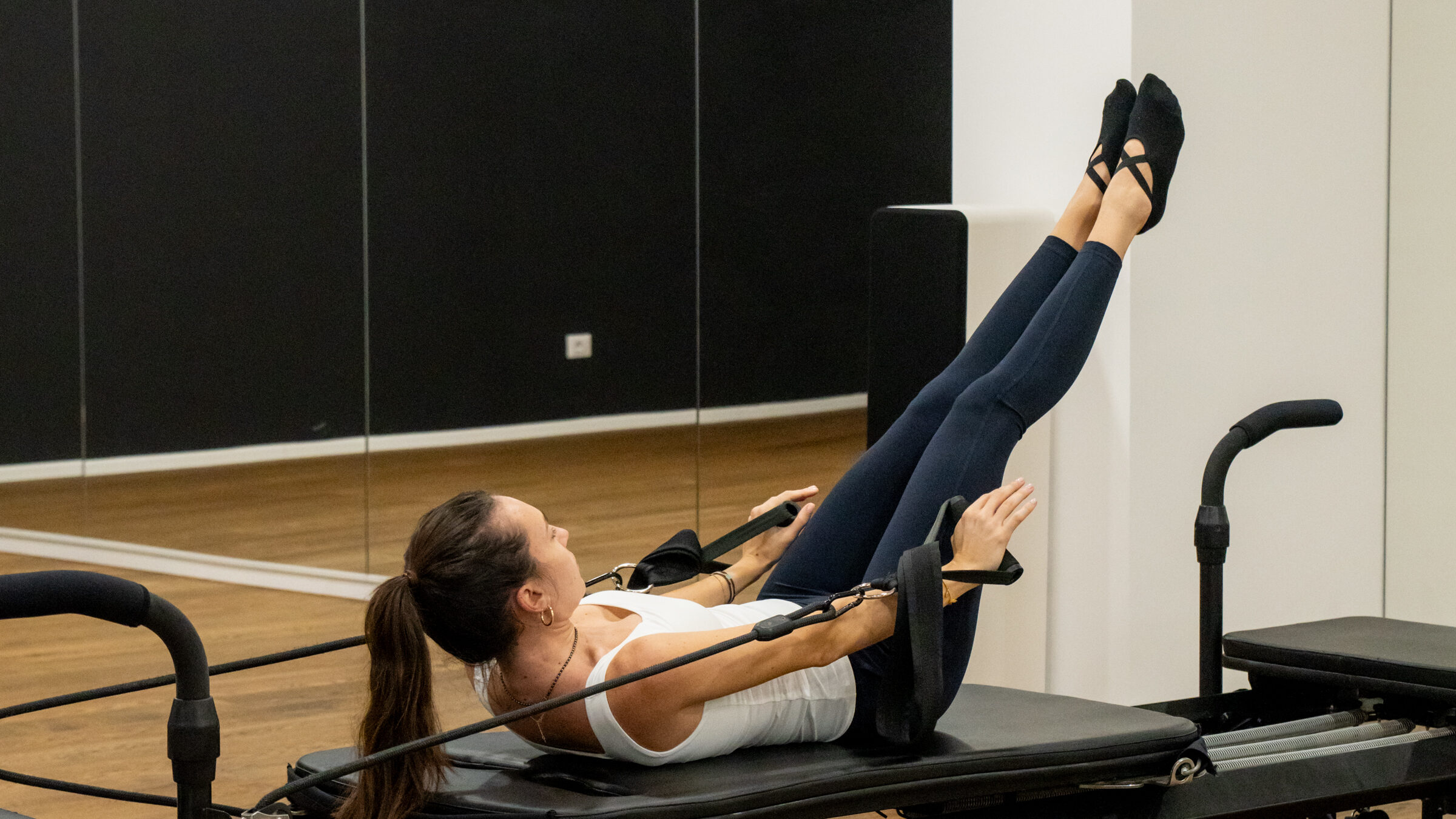
Reformer Pilates is one of the most appreciated and widely used variations of the Pilates method. Unlike bodyweight Pilates, which relies solely on one's body weight, Reformer training involves the use of a machine equipped with springs, platforms, and straps, allowing for adjustable exercise intensity and a more targeted and adaptable workout for all fitness levels.
Thanks to its versatility, Reformer Pilates is an excellent choice for those seeking a structured and controlled workout, suitable for both beginners and advanced athletes. However, like any training method, it has both advantages and limitations, which are important to consider before deciding whether to practice it.
At CoreWork studios in Milan, Reformer Pilates is offered in an even more innovative form, incorporating advanced machines such as the Core-reformer, designed to provide a complete and high-intensity workout.
What Is the Reformer and How Does It Work?
The Reformer is a machine developed by Joseph Pilates in the 1920s, designed to improve strength, flexibility, and posture.
Machine Description and Components
The Reformer consists of:
- A sliding carriage mounted on rails, moving back and forth.
- Resistance springs, which can be adjusted to modify exercise intensity.
- Straps and handles, used to perform controlled movements with arms and legs.
- A fixed platform, which helps stabilize the body and execute exercises with precision.
- A footbar, serving as an anchor point for various exercise positions.
The main advantage of this machine is the ability to adjust the resistance level according to individual needs, making exercises easier for beginners and more challenging for advanced practitioners.
Difference Between the Classic Reformer and Modern Machines Like the Core-reformer
In recent years, the Core-reformer has revolutionized the world of Pilates, taking the concept of the Reformer to the next level.
The main differences between the classic Reformer and the Core-reformer include:
- Higher intensity: The Core-reformer is designed for full-body, high-intensity training, combining Pilates with cardiovascular exercise.
- Smoother and more progressive resistance: With an advanced sliding system, the Core-reformer allows for more controlled movements and greater muscle engagement.
- Greater variety of exercises: While the traditional Reformer mainly focuses on muscle toning and posture, the Core-reformer enables a more comprehensive workout, incorporating strength, balance, and cardiovascular endurance.
At CoreWork studios in Milan, the Core-reformer are used to provide a more dynamic and engaging Fitness Pilates experience, ideal for those looking for a more effective workout than traditional Pilates.
Benefits of Training with the Reformer
Using the Reformer offers numerous advantages over bodyweight Pilates, making it an ideal choice for those seeking a customizable and effective workout.
Adjustable Resistance for Personalized Workout Intensity
One of the key strengths of the Reformer is the ability to adjust resistance through its spring system, allowing users to:
- Tailor exercise intensity to their fitness level.
- Progress gradually, increasing resistance as they develop strength and control.
- Ensure safer workouts for beginners, minimizing the risk of overexertion.
With the Core-reformer at CoreWork, this feature is even more advanced, offering greater customization and a more efficient workout.
Spinal Support and Reduced Joint Stress
Unlike Matwork Pilates, the Reformer provides greater spinal support, making it particularly suitable for individuals with back or joint issues.
- The platform and sliding carriage help maintain proper posture, reducing the risk of performing incorrect movements.
- Adjustable resistance helps lighten the load on joints, preventing excessive impact.
- Exercises in a lying or inclined position are ideal for those who struggle with unsupported bodyweight exercises.
Greater Variety of Exercises Compared to Matwork
The Reformer allows for a much wider range of exercises than bodyweight Pilates, thanks to the ability to:
- Work in different positions: lying down, kneeling, standing, or sideways.
- Combine strength and flexibility movements in a single exercise.
- Add progressive resistance, enabling faster muscle toning and strengthening.
In CoreWork’s classes, the Core-reformer further expands this variety, offering a comprehensive workout that integrates strength, cardio, and endurance in a single session.
Limitations of Training with the Reformer
Despite its many benefits, Reformer Pilates also has some limitations, which should be considered before choosing this training method.
The Need for Professional Guidance to Avoid Postural Mistakes
Unlike Matwork Pilates, which can be practiced independently, the Reformer requires expert supervision to:
- Avoid incorrect posture, which could lead to tension or pain.
- Maximize the use of resistance springs, adjusting the load appropriately.
- Learn proper technique, preventing abrupt or improper movements.
At CoreWork studios, classes are held in mini-groups of 6 people, ensuring personalized attention and constant guidance from certified instructors.
Higher Cost Compared to Bodyweight Pilates
Another aspect to consider is the cost of Reformer training, which is generally higher than bodyweight Pilates due to:
- The use of specialized equipment.
- The need for qualified instructors.
- The limited availability of equipped studios.
Limited Availability to Specialized Studios
While Matwork Pilates can be practiced anywhere, the Reformer requires specific equipment, available only in dedicated studios.
In Milan, CoreWork studios offer the opportunity to practice Reformer Pilates with state-of-the-art equipment, combining this method with a more dynamic and innovative approach.
The CoreWork Method – The Innovation of the Core-reformer
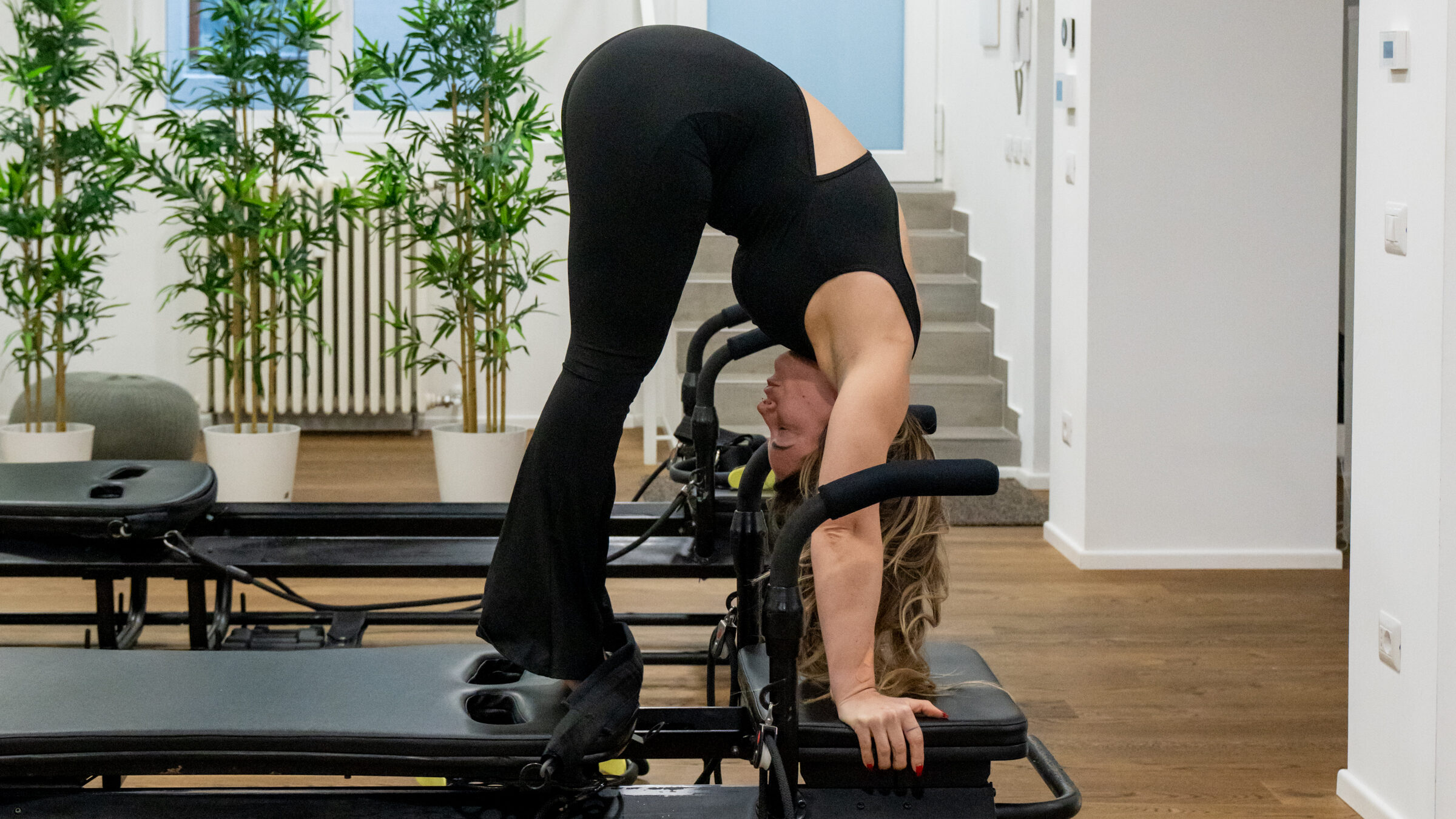
In recent years, traditional Pilates has evolved to meet the needs of those seeking a more dynamic, effective, and comprehensive workout. In Milan, CoreWork has introduced an innovative method that revolutionizes the concept of Fitness Pilates, blending classical Pilates principles with high-intensity exercises and targeted cardiovascular training.
The CoreWork Method is distinguished by the use of advanced machines like the Core-reformer and CoreFormer, which increase resistance, enhance muscle control, and provide a more engaging workout. This methodology offers a more dynamic and customizable approach, suitable for all fitness levels, making it one of the most effective choices for achieving visible results in a short time.
What Is CoreWork Fitness Pilates?
CoreWork Fitness Pilates is an innovative discipline that combines classical Pilates, functional training, and cardio, creating a complete and effective workout.
Fusion of Classical Pilates, Functional Training, and Cardio
Unlike traditional Pilates, which focuses on core stability and postural control, CoreWork Fitness Pilates integrates:
- High-intensity movements to boost metabolism.
- Functional exercises that engage the entire body.
- Low-impact cardiovascular sessions, perfect for improving endurance without stressing the joints.
This combination allows for calorie burning, muscle toning, and posture improvement in a single session.
Use of Core-reformer – Advanced Equipment for a Full-Body Workout
At the heart of the CoreWork Method are the Core-reformer, state-of-the-art machines that:
- Enable progressive resistance adjustment, making the workout adaptable to any fitness level.
- Provide a full-body workout, focusing on core, legs, glutes, arms, and back.
- Improve stability and balance, reducing the risk of injuries.
Unlike the traditional Reformer, the Core-reformer allows for greater muscle engagement and higher intensity, making it perfect for those seeking a more challenging and dynamic workout.
Specific Benefits of the CoreWork Method
CoreWork Fitness Pilates offers numerous advantages over classical Pilates, thanks to a more complete and customizable approach.
Full-Body Engagement in Every Exercise
Every movement performed with the Core-reformer engages multiple muscle groups simultaneously, allowing for a balanced and effective workout. This results in:
- Increased muscle endurance without excessive loads.
- Improved coordination and balance, thanks to constant core activation.
- More efficient sessions, working on strength, flexibility, and stability in a single exercise.
Cardio Training Combined with Muscle Toning
One of the standout features of the CoreWork Method is the integration of low-impact cardiovascular sessions, which help to:
- Enhance endurance and lung capacity without excessive joint strain.
- Increase calorie consumption, aiding in fat loss and muscle toning.
- Alternate resistance phases with active recovery, making the workout more dynamic and stimulating.
Thanks to this combination, CoreWork Fitness Pilates is perfect for those looking for a more intense workout than traditional Pilates, yet still safe and suitable for all ages.
Suitable for All Fitness Levels with Adjustable Resistance
The Core-reformer allow for intensity modulation, making the workout ideal for both beginners and advanced athletes.
Each exercise can be adapted based on:
- Strength and endurance level.
- Personal goals, such as toning, weight loss, or posture improvement.
- Specific needs, such as post-injury rehabilitation or postural training.
This versatility makes CoreWork Fitness Pilates an ideal choice for those seeking a personalized and goal-oriented workout.
Differences Between CoreWork and Traditional Pilates
The CoreWork Method differs from classical Pilates in intensity, exercise variety, and class structure.
Higher Intensity and Muscle Activation
Compared to traditional Pilates, CoreWork Fitness Pilates includes:
- More dynamic exercises, engaging multiple muscle groups simultaneously.
- Higher resistance, thanks to the Core-reformer, enabling a more intense and deep workout.
- Alternation of work and active recovery phases, to stimulate metabolism and enhance endurance.
This greater intensity makes the CoreWork Method ideal for those looking for visible results in less time.
More Dynamic Than Classical Pilates, With a Focus on Metabolism
While traditional Pilates emphasizes control and movement fluidity, CoreWork Fitness Pilates:
- Incorporates faster and more intense movements to accelerate metabolism.
- Enhances cardiovascular endurance, combining toning exercises with cardio sessions.
- Increases muscular endurance, thanks to higher intensity and a greater variety of movements.
This combination makes the CoreWork Method more comprehensive than traditional Pilates, as it focuses not only on strength and posture but also on energy expenditure and physical endurance.
Structured in Small Group Classes for a Personalized Experience
One of the key features of CoreWork Studios in Milan is the personalized approach, ensured by:
- Small group classes of up to 6 people, allowing instructors to provide detailed attention to each participant.
- Exercise adaptations based on individual needs, ensuring a safer and more effective workout.
- An exclusive and motivating environment, making each session an engaging and stimulating experience.
This focus on personalization maximizes results, ensuring that each exercise is performed correctly and with the appropriate resistance level.
Which Pilates Workout to Choose?
After analyzing the different approaches to Pilates—Matwork, Reformer, and CoreWork Fitness Pilates—it’s important to determine which option best suits your needs. Each method has its own specific features and unique benefits, making it more or less suitable depending on fitness goals, experience level, and personal preferences.
If your goal is to strengthen the core, improve posture, and increase muscle endurance, all three methods are valid options. However, differences in workout structure and support can significantly influence the final choice.
Comparison Between Matwork, Reformer, and CoreWork
Each type of Pilates offers specific benefits, and the choice depends on what you are looking for in a workout.
- If you want a convenient, accessible method that can be done anywhere, Matwork Pilates is the ideal solution. This type of workout can be performed without special equipment, requiring only a mat and, if needed, small accessories like resistance bands or light weights. It is especially useful for those looking to develop core strength and flexibility through controlled and focused exercises. However, the lack of adjustable resistance can make it more challenging for those with low muscle strength or those needing additional support.
- If you prefer a more controlled workout with adjustable resistance, Reformer Pilates is a great option. The Reformer machine allows for greater spinal support, reducing the risk of injuries and improving movement precision. It is particularly suitable for those looking for a wider variety of exercises and a structured approach. However, the need for specialized equipment and the higher cost of sessions may be a limitation for those seeking a more flexible and independent workout.
- If you want a more intense and comprehensive workout, CoreWork Fitness Pilates is the best choice. This method combines traditional Pilates principles with a more dynamic, high-intensity approach, using the Core-reformer. The result is a full-body workout that enhances strength, stability, cardiovascular endurance, and muscle toning in a single session. CoreWork Fitness Pilates is perfect for those who want faster results and a more engaging, personalized experience, thanks to small-group classes (max 6 people) that ensure greater instructor attention.
How to Determine the Best Pilates Method for You?
To choose the most suitable Pilates method, it is important to evaluate key factors, such as personal goals, fitness level, and access to specialized equipment and facilities.
- If your goal is toning and posture improvement, all three Pilates methods are effective, but Matwork and Reformer Pilates are especially suitable for those seeking a gentler, progressive approach.
- If you are recovering from an injury or have joint and posture-related issues, Reformer Pilates provides better spinal and joint support, thanks to its adjustable resistance and controlled movements.
- If your goal is to enhance athletic performance or achieve faster results, CoreWork Fitness Pilates is the most effective choice. By integrating strength, resistance, and cardio exercises, it optimizes full-body conditioning, improving muscle balance and cardiovascular endurance.
Your fitness level and need for support also play a fundamental role in the decision:
- If you are a beginner or prefer a gradual approach, Matwork or Reformer Pilates may be more suitable.
- If you are already active and looking for a more challenging workout, CoreWork Fitness Pilates is the best solution.
Lastly, access to equipment and preference for a structured environment may influence your final choice.
- While Matwork Pilates can be practiced anywhere, both Reformer Pilates and CoreWork Fitness Pilates require access to specialized studios.
- In Milan, CoreWork studios, located in Sempione and Missori, offer an exclusive experience with state-of-the-art equipment and certified instructors who provide personalized guidance in every session.
Choosing the right Pilates method ultimately depends on a combination of personal and practical factors. Regardless of the final decision, Pilates remains one of the best disciplines to strengthen the body, improve posture, and achieve optimal physical and mental well-being.
Where to Train in Milan?
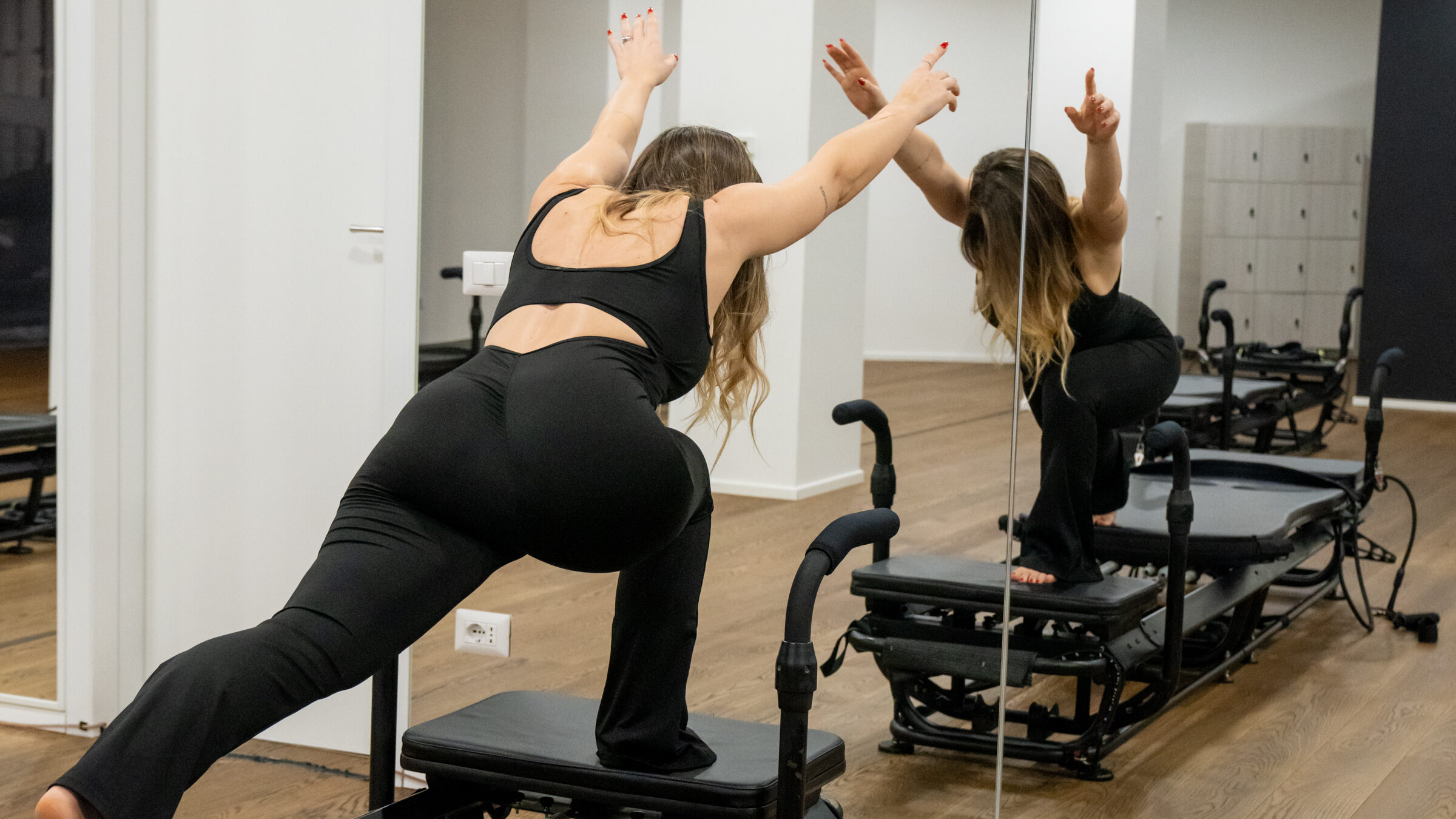
In Milan, the demand for Pilates classes is continuously growing, with more and more people looking for specialized studios that offer effective and personalized workouts. Among the various options available, CoreWork stands out as one of the most innovative and comprehensive studios, thanks to its unique combination of traditional Pilates, functional exercises, and cardio training.
CoreWork studios offer a one-of-a-kind experience in the world of Fitness Pilates in Milan, using advanced equipment like the Core-reformer, highly qualified instructors, and a structured approach designed to deliver tangible and lasting results.
CoreWork Studios in Milan: Locations and Services
CoreWork studios are located in two strategic areas in the heart of Milan, easily accessible and equipped with state-of-the-art facilities:
Each studio is designed to offer a modern, welcoming environment, fully equipped for Core-reformer and CoreFormer training—innovative machines that help maximize the benefits of Pilates, combining muscle toning and cardiovascular endurance.
A key feature of CoreWork studios is the small group class format with a maximum of six participants per session, which allows for:
- Personalized attention from instructors, ensuring proper posture correction and exercise intensity adjustment based on individual needs.
- A more engaging and motivating experience, thanks to smaller class sizes that allow for a more focused training journey.
- Faster progress and results, due to continuous monitoring of exercise techniques and execution.
Classes are structured to accommodate both beginners and advanced practitioners, with adaptable programs based on fitness level and personal goals.
Why Choose CoreWork for Pilates in Milan?
Choosing CoreWork means opting for a high-quality fitness experience, designed for those who want to maximize their Pilates training.
State-of-the-Art Facilities with Exclusive Equipment
CoreWork studios are among the few in Italy offering workouts with the Core-reformer, advanced machines that:
- Increase workout intensity without excessive joint strain.
- Enhance muscle engagement, working on strength, stability, and endurance in a single movement.
- Customize exercise intensity, thanks to adjustable resistance settings.
These machines represent the evolution of Reformer Pilates, making training more dynamic, effective, and engaging.
Personalized Approach for Every Fitness Level
A key strength of CoreWork is its focus on personalization. Each session is designed to:
- Adapt to the fitness level of every participant, allowing beginners and advanced athletes to train safely and effectively.
- Provide constant support from instructors, ensuring correct posture and proper exercise execution.
- Integrate targeted exercises based on individual goals, whether for toning, posture improvement, or athletic performance.
This methodology ensures faster, long-lasting results while reducing the risk of injuries and improving overall well-being.
Immersive Experience with a Unique Method in Italy
Beyond the technical aspects, CoreWork stands out for the quality of experience it offers clients. The atmosphere of the studios is designed to make each session a moment of well-being and motivation, thanks to:
- A welcoming, well-designed environment that promotes focus and body awareness.
- Classes structured to maximize training efficiency, combining strength, cardio, and muscle endurance in a single session.
- An innovative and continuously evolving method, blending the best of classical Pilates with the most modern functional training techniques.
CoreWork Fitness Pilates is ideal for those seeking a complete, effective, and engaging workout, with the support of certified instructors and an exclusive environment dedicated to body and mind wellness.
Thanks to its strategic locations in the heart of Milan, CoreWork is the perfect choice for those wanting to practice high-intensity Pilates with guaranteed results.
Conclusion
Choosing the right type of Pilates depends on several factors, including personal goals, experience level, and training preferences.
Matwork Pilates is an excellent option for those looking for an accessible, flexible method that can be practiced anywhere, focusing on core control and posture. Reformer Pilates offers adjustable support through spring resistance, allowing for a wider variety of exercises and a smoother progression.
For those seeking a more complete and dynamic workout, CoreWork Fitness Pilates is the best choice. With the Core-reformer, this method combines Pilates, functional training, and cardio, delivering a full-body, high-intensity, and customizable workout.
In Milan, CoreWork studios provide a unique training experience, featuring small group classes, highly qualified instructors, and cutting-edge equipment.
Whether your goal is to improve posture, strengthen the core, or achieve greater muscle definition, CoreWork Fitness Pilates helps you reach your objectives safely and effectively.
No matter which Pilates method you choose, it remains one of the most effective disciplines for enhancing strength, flexibility, and overall well-being.
If you're looking for an innovative, engaging training experience with visible results in a short time, CoreWork is the perfect place to start your journey toward better fitness and greater balance.
Discover CoreWork Fitness Pilates and transform your workout.
@coreworkmilano Sei un principiante o un esperto? In ogni caso, il Fitness Pilates è il percorso ideale per trasformare il tuo corpo e la tua mente, a prescindere dal tuo livello di partenza. Con costanza e determinazione, potrai vedere progressi tangibili, passando dal semplice apprendimento delle basi a esercizi avanzati che sfidano i tuoi limiti. Non è mai troppo tardi per iniziare: con CoreWork, trasforma il tuo allenamento in un viaggio di crescita personale. Provare per credere: il cambiamento è alla tua portata. #corework #dynamicpilates #fitnesspilates #reformerpilates #fitnessmilano #pilatesmilano ♬ suono originale - CoreWork
Can't see the video properly? Visit our TikTok profile.
FAQ - Frequently Asked Questions
Is bodyweight Pilates less effective than Reformer Pilates?
It is not accurate to say that bodyweight Pilates (Matwork) is less effective than Reformer Pilates; rather, they are two different approaches with distinct goals and execution methods.
Matwork Pilates is excellent for developing body awareness, balance, and core strength, as the body works against gravity without the support of machines. However, it requires greater control and stability, making it more challenging, especially for beginners.
Reformer Pilates, on the other hand, thanks to the adjustable resistance provided by the springs, allows for a more customized and targeted workout, making some movements easier while intensifying others. It is particularly useful for those who need additional support, seek a smoother progression, or want to focus on toning with a wider variety of exercises.
CoreWork Fitness Pilates, which uses the vCore-reformer, combines the best of both methods, offering a more dynamic, complete, and high-intensity workout.
Is CoreWork Fitness Pilates suitable for everyone?
Yes, CoreWork Fitness Pilates is designed to adapt to all fitness levels, from beginners to advanced athletes.
Thanks to the adjustable resistance of the Core-reformer, each exercise can be tailored to individual abilities, allowing participants to start gradually and increase intensity as they gain strength and control.
Additionally, CoreWork studios conduct small-group classes with a maximum of six participants per session, enabling instructors to provide personalized guidance, correct posture, and suggest modifications when necessary. This makes it suitable even for those with postural issues or who require a more controlled training approach.
However, individuals with specific back or joint conditions should consult a professional before starting any workout program.
How long does it take to see results?
The results of CoreWork Fitness Pilates depend on training frequency, consistency, and diet, but noticeable improvements can generally be seen within 4 to 6 weeks.
With a regular practice of 2-3 sessions per week, you can expect:
Improved posture and balance within the first few weeks.
Increased strength and muscle endurance within the first month.
Muscle toning and greater definition after 6-8 weeks.
The CoreWork method accelerates results by combining resistance training, cardiovascular exercises, and postural control, making the workout more effective than traditional methods.
For optimal results, it is recommended to follow a consistent training program combined with a healthy lifestyle and proper nutrition.
